


Please select a chapter to start learning
Quantum Computing Definition
Quantum computing is a revolutionary field that leverages the principles of quantum mechanics to perform computations. Unlike classical computers, which use bits to represent information as either 0 or 1, quantum computers utilize quantum bits or qubits. Qubits can exist in multiple states simultaneously, a phenomenon known as superposition. This allows quantum computers to process information in parallel, potentially solving complex problems much faster than classical computers.
The Importance of Quantum Computing
Quantum computing holds the potential to revolutionize various fields and industries. Some of its key applications include:
- Drug Discovery: Simulating complex molecular interactions to accelerate the development of new drugs and treatments.
- Materials Science: Designing novel materials with superior properties, such as superconductors and advanced batteries.
- Cryptography: Breaking current encryption methods and developing new, quantum-resistant algorithms.
- Artificial Intelligence: Enhancing AI capabilities, particularly in machine learning and optimization problems.
- Financial Modeling: Optimizing financial portfolios and risk assessment.
- Climate Modeling: Simulating complex climate systems to better understand and address climate change.
By harnessing the power of quantum mechanics, quantum computers could solve problems that are currently intractable for classical computers, leading to significant advancements in science, technology, and society.
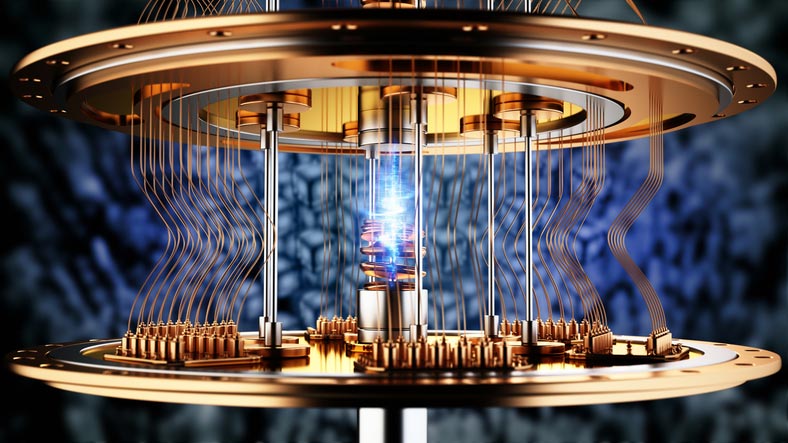
Quantum Computer
A Brief History of Quantum Computing
The concept of quantum computing emerged from the intersection of quantum mechanics and computer science. Here's a timeline of key milestones:
- 1980s:
- Physicist Richard Feynman proposed the idea of quantum computers to simulate quantum systems.
- Paul Benioff introduced the first quantum mechanical model of a Turing machine.
- 1994:
- Peter Shor developed Shor's algorithm, which can efficiently factor large numbers, a task that is exponentially difficult for classical computers.
- 1996:
- Lov Grover invented Grover's algorithm, which can search an unsorted database quadratically faster than classical algorithms.
- Late 1990s and Early 2000s:
- Significant progress was made in building small-scale quantum computers.
- Researchers focused on developing quantum error correction techniques to mitigate the effects of noise and decoherence.
- 2010s:
- Quantum computing gained significant momentum, with major companies like IBM, Google, and Microsoft investing heavily in research and development.
- Quantum supremacy experiments were conducted, where quantum computers were able to perform tasks that classical computers could not.
- Present and Future:
- Quantum computing is rapidly evolving, with the potential to revolutionize various fields, including materials science, drug discovery, and artificial intelligence.
- Researchers continue to work on improving quantum hardware, developing new algorithms, and addressing the challenges of scaling up quantum computers.
As quantum computing technology advances, we can expect to see groundbreaking discoveries and innovations that will shape the future of technology and society.

Quantum Bits: The Building Blocks of Quantum Computing
Quantum computers rely on quantum bits, or qubits, as their fundamental unit of information. Unlike classical bits, which can only represent a 0 or a 1, qubits can exist in a superposition of states, meaning they can be both 0 and 1 simultaneously.
This unique property of superposition allows quantum computers to perform calculations in parallel, potentially leading to significant speedups over classical computers. Additionally, qubits can become entangled, meaning their states become correlated, even when separated by large distances. This phenomenon enables quantum computers to perform complex computations that are beyond the reach of classical machines.
Qubits NotesHowever, qubits are highly sensitive to noise and decoherence, which can disrupt their quantum states. To mitigate these challenges, researchers are developing advanced error correction techniques to ensure the reliability of quantum computations.
Quantum Superposition: The Magic of Quantum Computing
One of the fundamental principles of quantum mechanics that underpins quantum computing is superposition. In classical computing, a bit can represent either a 0 or a 1. However, in quantum computing, a qubit can exist in a superposition of both states simultaneously. This means that a qubit can be both 0 and 1 until it is measured.
To visualize this concept, imagine a coin. In classical physics, a coin can either be heads or tails. But in the quantum world, a coin can be in a superposition of both heads and tails until it is observed. When we measure the coin, its quantum state collapses, and we observe either heads or tails.
Superposition allows quantum computers to explore multiple possibilities simultaneously, making them potentially much faster than classical computers for certain tasks. For example, in a classical computer, to check all possible combinations of a problem, it would need to go through each one sequentially. In a quantum computer, due to superposition, it can explore all possibilities at once.
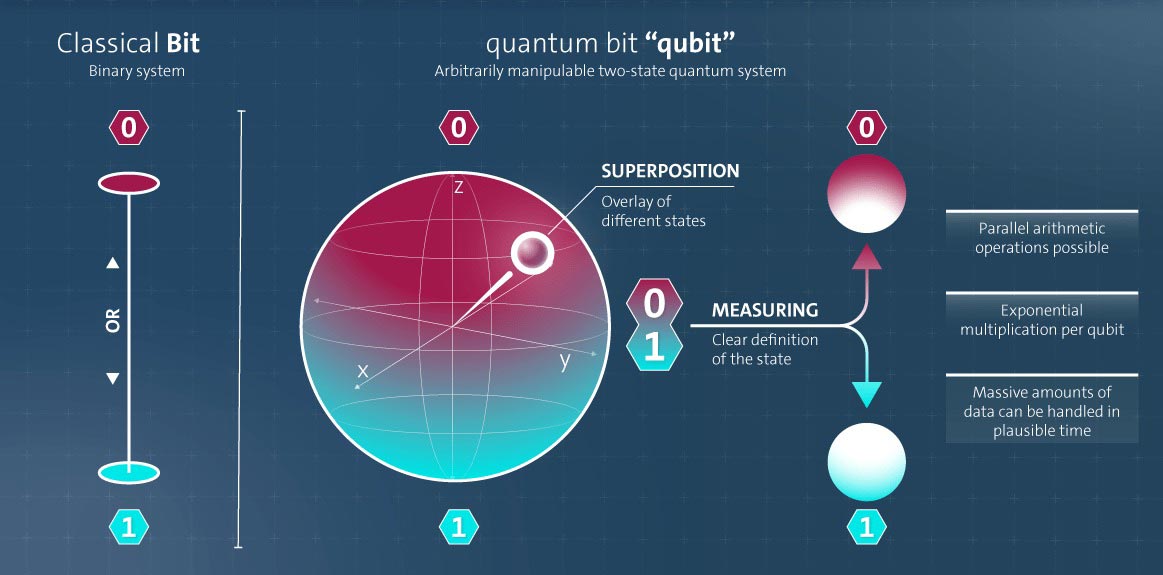
Classical Bit vs a Qubit
Quantum Entanglement: A Mysterious Connection
Quantum entanglement is another fundamental principle of quantum mechanics that plays a crucial role in quantum computing. It occurs when two or more qubits become interconnected, such that the state of one qubit instantly affects the state of the other, regardless of the distance between them.
Imagine two entangled qubits, A and B. If we measure qubit A to be in the state 0, we instantly know that qubit B must be in the state 1, even if they are separated by vast distances. This phenomenon, often referred to as "spooky action at a distance," puzzled even Einstein.
Entanglement enables quantum computers to perform complex calculations and solve problems that are intractable for classical computers. By manipulating entangled qubits, researchers can create powerful quantum algorithms that can revolutionize fields like cryptography, materials science, and drug discovery.
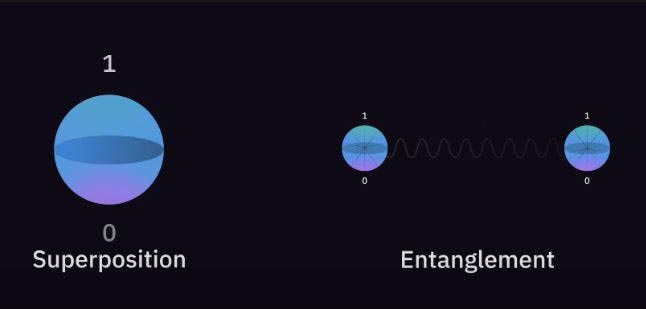
Difference Between Superposition and Entanglement
Shor's Algorithm: A Quantum Leap in Factoring
Shor's algorithm, developed by Peter Shor in 1994, is a quantum algorithm that can efficiently factor large integers. This has significant implications for cryptography, as many modern encryption systems rely on the difficulty of factoring large numbers.
Shor's algorithm leverages the power of quantum mechanics to perform the following steps:- Quantum Fourier Transform (QFT): The QFT is a quantum algorithm that efficiently performs the Fourier transform, a mathematical operation used in signal processing and number theory. It allows the quantum computer to quickly analyze the periodic patterns in the function being evaluated.
- Number Theory: Shor's algorithm utilizes number theory concepts, such as modular arithmetic and continued fractions, to reduce the factorization problem to a period-finding problem. By finding the period of a specific function, the algorithm can determine the factors of the target number.
- Quantum Phase Estimation: Quantum phase estimation is a technique that allows the quantum computer to efficiently estimate the phase of a quantum state. This phase information is crucial for determining the period of the function and, consequently, the factors of the number.
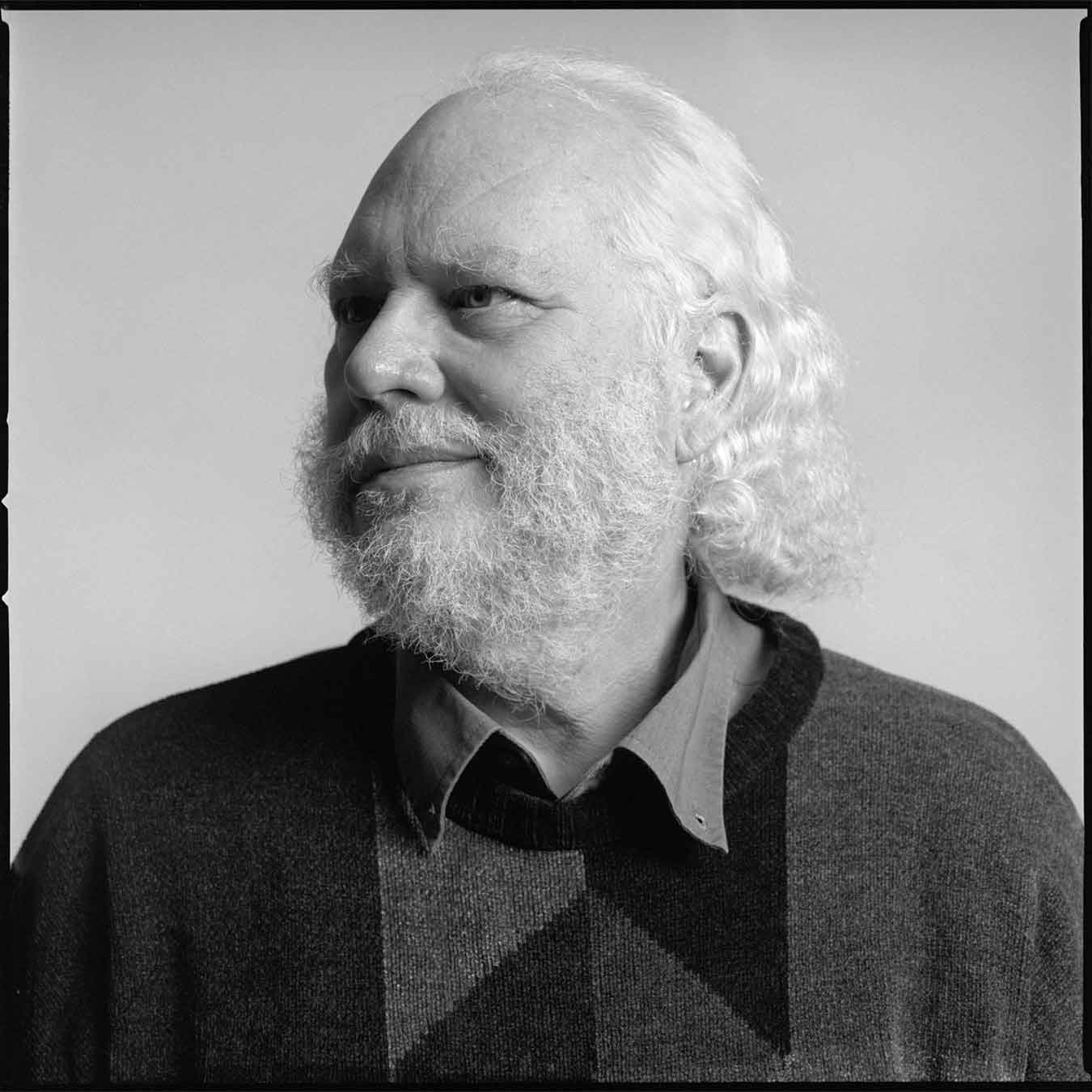
Peter Shor
- Cryptographic Implications: Shor's algorithm poses a significant threat to public-key cryptography systems like RSA, which rely on the difficulty of factoring large numbers. As quantum computers become more powerful, they could potentially break these encryption systems, compromising the security of digital communications.
- Quantum-Resistant Cryptography: The development of quantum-resistant cryptographic algorithms is an active area of research to protect against future quantum attacks. These algorithms are designed to be secure against both classical and quantum computers.
- Advancements in Quantum Computing: Shor's algorithm has driven significant progress in quantum hardware and software development. The pursuit of building practical quantum computers capable of running Shor's algorithm has led to many breakthroughs in quantum technology.
While Shor's algorithm is a powerful tool, building a large-scale quantum computer capable of running it efficiently remains a significant challenge. However, the potential impact of quantum computing on cryptography and other fields is undeniable.
Grover's Algorithm: A Quantum Search Algorithm
Grover's algorithm, developed by Lov Grover in 1996, is a quantum algorithm for searching an unsorted database. It offers a quadratic speedup over classical search algorithms, making it a powerful tool for certain types of search problems.
Grover's algorithm involves the following steps:- Initialization: A quantum register is initialized to an equal superposition of all possible states, representing the database entries.
- Oracle: A quantum oracle is applied to the quantum register. This oracle marks the target state with a phase shift, distinguishing it from the other states.
- Amplification: A quantum amplitude amplification step is performed to increase the probability of measuring the target state. This involves applying a series of quantum gates that amplify the amplitude of the target state while reducing the amplitudes of the other states.
- Measurement: The quantum register is measured, and with high probability, the measurement outcome will be the index of the target state.

Lov Grover
- Database Search: Grover's algorithm can significantly speed up database searches, especially when the database is unstructured or there is no efficient classical indexing scheme.
- Quantum Machine Learning: Grover's algorithm can be applied to various machine learning tasks, such as feature selection and model training.
- Quantum Cryptography: It can be used to enhance the security of quantum cryptographic protocols.
While Grover's algorithm offers a significant speedup over classical search algorithms, it is important to note that its practical applications are limited by the size of the database and the overhead of quantum operations. However, as quantum hardware continues to improve, Grover's algorithm could become a valuable tool for a wide range of applications.
Other Notable Quantum Algorithms
Beyond Shor's and Grover's algorithms, quantum computing offers a variety of other algorithms with potential applications:
Quantum Simulation- Simulating Quantum Systems: Quantum computers are inherently suited to simulate quantum systems, such as molecules and materials, which are difficult to simulate classically.
- Drug Discovery: Simulating molecular interactions can accelerate drug discovery processes.
- Material Science: Designing new materials with specific properties, like superconductors or advanced batteries.
- Quantum Machine Learning Algorithms: Quantum computers can potentially accelerate machine learning algorithms, especially for tasks involving large datasets and complex models.
- Quantum Neural Networks: Quantum neural networks could outperform classical neural networks in certain tasks, such as pattern recognition and optimization.
- Quantum Approximate Optimization Algorithm (QAOA): QAOA can be used to solve combinatorial optimization problems, such as the traveling salesman problem and scheduling problems.
- Quantum Adiabatic Algorithms: Adiabatic quantum computers can be used to solve optimization problems by slowly evolving the system into the ground state of a problem-specific Hamiltonian.
While these algorithms hold great promise, it's important to note that practical applications and the scalability of quantum computers are still areas of active research. As quantum hardware and software continue to advance, we can expect to see more innovative quantum algorithms emerging in the future.
Leading Companies in Quantum Computing
Several major tech companies and research institutions are at the forefront of quantum computing research and development:
- Google AI Quantum Google's quantum computing initiative focuses on building quantum hardware and software, with the goal of achieving quantum supremacy.
- IBM Quantum: IBM is a pioneer in quantum computing, offering cloud-based access to quantum computers and developing quantum hardware and software.
- Microsoft Quantum: Microsoft is investing heavily in quantum computing research, particularly in topological quantum computing, which is a promising approach to building fault-tolerant quantum computers.
- Intel: Intel is developing quantum computing hardware, including quantum processors and cryogenic control systems.
- Rigetti Computing: Rigetti is a quantum computing startup focused on building quantum processors and developing quantum software.
- IonQ: IonQ is a quantum computing company that uses trapped ion qubits to build quantum computers.
- Xanadu: Xanadu is a quantum computing company that specializes in photonic quantum computing.
These companies are driving innovation in quantum computing and working towards realizing the full potential of this technology.
Quantum Computing and Cryptography
Quantum computing has the potential to revolutionize the field of cryptography, both by breaking existing cryptographic systems and by enabling new, more secure quantum-resistant cryptographic techniques.
Impact of Quantum Computing on Classical Cryptography- Breaking Public-Key Cryptography
- Threat to Digital Signatures
- Lattice-based Cryptography
- Code-Based Cryptography
- Multivariate Cryptography
- Hash-Based Cryptography
As quantum computing technology advances, it is crucial to develop and deploy quantum-resistant cryptographic algorithms to ensure the security of digital information in the quantum era.
Quantum Computing Simulators
Quantum computing simulators are software tools that emulate the behavior of quantum computers on classical hardware. These simulators are essential for researchers, developers, and students to learn about quantum computing concepts, experiment with quantum algorithms, and develop quantum software without requiring physical quantum hardware.
Popular Quantum Computing Simulators:- Qiskit: Developed by IBM, Qiskit is a powerful open-source framework for building quantum circuits and running them on both simulators and real quantum hardware.
- Cirq: Developed by Google AI Quantum, Cirq is a Python framework for programming quantum computers. It provides a flexible and expressive language for designing and simulating quantum circuits.
- QuTiP: QuTiP (Quantum Toolbox in Python) is a comprehensive Python package for simulating the dynamics of open quantum systems. It can be used to simulate quantum circuits, quantum optics, and quantum control.
- Rigetti Forest: Rigetti Forest is a cloud-based platform for quantum computing, providing access to Rigetti's quantum hardware and simulators.
Quantum computing simulators play a vital role in the development of quantum algorithms and applications. As quantum hardware advances, simulators will continue to be essential tools for researchers and developers to explore the potential of quantum computing.
Quantum Computing Applications in Pharmaceuticals
Quantum computing has the potential to revolutionize the pharmaceutical industry by accelerating drug discovery and development. Here are some key applications:
- Drug Discovery and Development
- Molecular Simulations
- Protein Folding
- Virtual Screening
- Optimization of Drug Synthesis
- Personalized Medicine
- Predicting Drug Response
- Drug Design
- Other Applications
- Material Science
- Biosensor Development
By harnessing the power of quantum computing, the pharmaceutical industry can accelerate drug discovery, improve treatment outcomes, and ultimately save lives.
Quantum Computing Applications in Finance
Quantum computing has the potential to revolutionize the finance industry by offering significant advantages in various areas:
- Portfolio Optimization
- Optimizing Investment Portfolios
- Risk Management
- Algorithmic Trading
- High-Frequency Trading
- Predictive Analytics
- Risk Modeling
- Monte Carlo Simulations
- Credit Risk Modeling
- Fraud Detection
- Anomaly Detection
By leveraging the power of quantum computing, the finance industry can make more informed decisions, reduce risks, and improve overall performance.
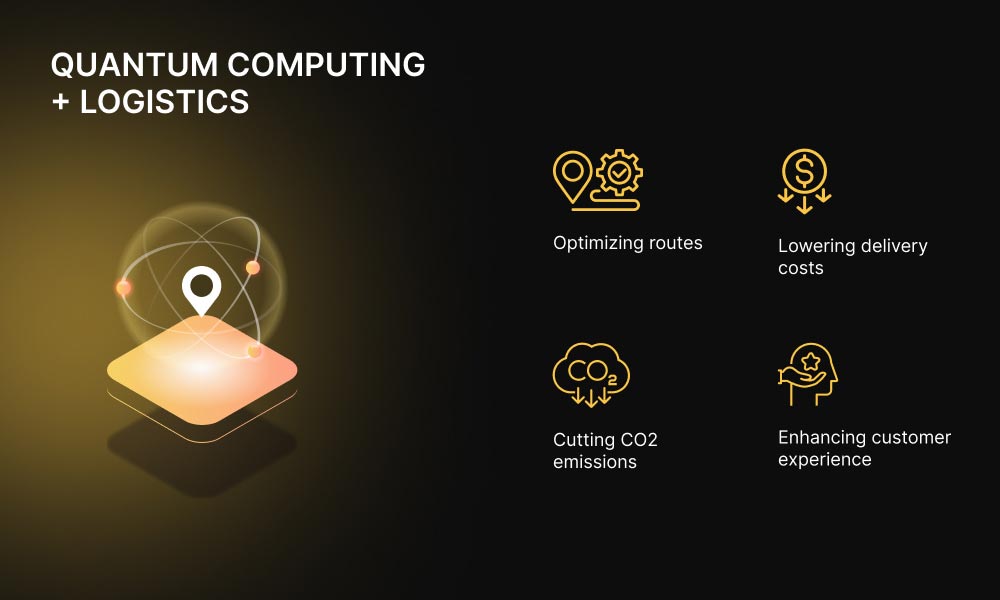
Quantum Computing in Logistics
Quantum Computing Applications in Logistics
Quantum computing has the potential to revolutionize the logistics industry by optimizing complex supply chain operations. Here are some key applications:
- Supply Chain Optimization
- Inventory Management: Quantum algorithms can optimize inventory levels to minimize costs and avoid stockouts.
- Route Optimization: Quantum computers can find the most efficient routes for transportation, reducing fuel consumption and delivery times.
- Demand Forecasting
- Predictive Analytics: Quantum machine learning algorithms can analyze vast amounts of data to predict future demand patterns.
By leveraging the power of quantum computing, the logistics industry can improve efficiency, reduce costs, and enhance customer satisfaction.
What I Learned About Quantum Computing
Key Concepts
- Quantum Bits (Qubits): The basic unit of quantum information, capable of existing in multiple states simultaneously.
- Superposition: The ability of a qubit to exist in multiple states at once.
- Entanglement: A phenomenon where two or more qubits become interconnected, sharing a single quantum state.
Quantum Algorithms
- Shor's Algorithm: A quantum algorithm that can efficiently factor large numbers, posing a threat to classical cryptographic systems.
- Grover's Algorithm: A quantum algorithm that can search an unsorted database quadratically faster than classical algorithms.
Applications of Quantum Computing
- Cryptography: Revolutionizing cryptography with quantum-resistant algorithms and quantum key distribution.
- Pharmaceuticals: Accelerating drug discovery and development through molecular simulations and protein folding simulations.
- Finance: Optimizing investment portfolios, improving risk management, and accelerating algorithmic trading.
- Logistics: Optimizing supply chains and improving demand forecasting.
- Materials Science: Designing new materials with advanced properties.
- Artificial Intelligence: Enhancing machine learning algorithms and AI applications.
Challenges and Future Directions
While quantum computing holds immense potential, significant challenges remain, including:
- Quantum Error Correction: Developing robust error correction techniques to mitigate the effects of noise and decoherence.
- Scalability: Building large-scale quantum computers with many qubits.
Despite these challenges, the future of quantum computing is bright. As technology advances, we can expect to see groundbreaking discoveries and innovations that will shape the future of technology and society.